Category: Media

UPV launches “Redona”, the platform reducing food waste in Valencia

The Universitat Politècnica de València (UPV) and Mercavalència have joined forces to develop “Redona”, an innovative digital platform that optimizes the management of food surpluses and promotes a circular economy in Valencia’s wholesale fruit and vegetable market. As reported by Plaza Innovación in Valencia Plaza, the tool has already helped recover more than one ton of food and manages over 22% of the market’s volume. The project, part of the “València 2030 Climate Mission”, marks a solid step towards a more sustainable, efficient, and socially responsible food system.

Nova plataforma solidària «Redona» per a frenar el desaprofitament alimentari

L The Polytechnic University of Valencia (UPV), together with Mercavalència, has launched Redona, a technological tool that directly connects wholesalers from the fruit and vegetable market with social organizations so that surplus food can be used instead of wasted. (economiadigital.es) In June 2025, more than one ton of fruit and vegetables suitable for consumption were already rescued, and around 22% of Mercavalència’s fruit and vegetable volume has been integrated into the platform. With more than 50 wholesalers involved, the project could recover up to 2,000 tons of surplus food per year. In addition to its social impact, the initiative also provides environmental benefits by reducing water footprints and carbon emissions, while strengthening the circular economy in the Valencian Community. Nace Redona, la plataforma solidaria para reducir el desperdicio alimentario

Agronews highlights the REDONA project by UPV to reduce food waste at Mercavalència

The specialized media outlet Agronews Comunitat Valenciana has published a news article highlighting the REDONA project, an initiative promoted by the Universitat Politècnica de València (UPV) to tackle food waste at Mercavalència through surplus donations and circular economy strategies. Direct link to the article:https://www.agronewscomunitatvalenciana.com/la-upv-apuesta-por-reducir-el-desperdicio-alimentario-con-donaciones-y-economia-circular The REDONA project is part of the innovation call funded by the València 2030 Climate Mission, and proposes an effective solution to give a second life to food that does not reach consumers but is in perfect condition to be donated to social organizations. REDONA systematizes the management of food surpluses at Mercavalència to facilitate their donation and ensure traceability. In doing so, it helps prevent the generation of organic waste and contributes to a circular economy model with a positive environmental and social impact.

REDONA is presented to the wholesale sector at Mercavalència as a response to the new food waste law

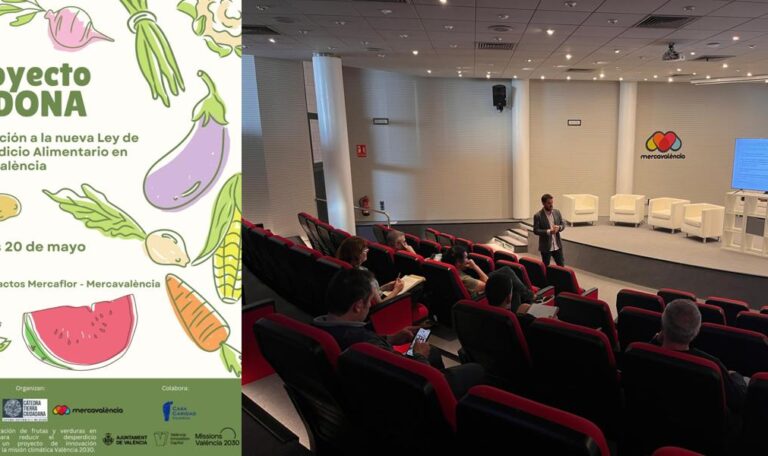
Mercavalència hosted an information session on the REDONA project, aimed at helping the wholesale sector comply with the new Law on the Prevention of Food Loss and Waste, while promoting sustainable and economically viable practices. The event was held in collaboration with the Universitat Politècnica de València (UPV), representatives from Mercavalència, and the social organization Casa Caridad. During the session, the contents of the new legislation were discussed, highlighting how REDONA can support compliance in a simple way, without interfering with companies’ daily operations. Special emphasis was placed on the tax benefits and cost savings associated with donating surplus food, compared to the economic losses caused by discarding still-edible products. Casa Caridad, the organization receiving the donated food, emphasized that it has the necessary infrastructure to absorb these surpluses and put them to immediate social use. The difference between surplus and waste was also clarified, stressing the importance of not donating food that is no longer suitable for consumption. REDONA proposes an operational protocol adapted to the pace of the wholesale market: product listings should be made before 7:00 a.m., and donations can be delivered between 8:00 and 8:30 a.m. This planning allows vendors to anticipate product deterioration by using their experience to identify what will not be sold in time. The organizers reminded attendees that the documentation required for donating is simple and very similar to what is already used with regular clients. In addition, the project is designed to accommodate specific situations, offering personalized support to each business. REDONA stands as a model of effective collaboration between universities, public administration, businesses, and social organizations to address the challenge of food waste from an innovative, pragmatic, and climate-responsible perspective.

REDONA is officially presented as a model of innovation and sustainability against food waste

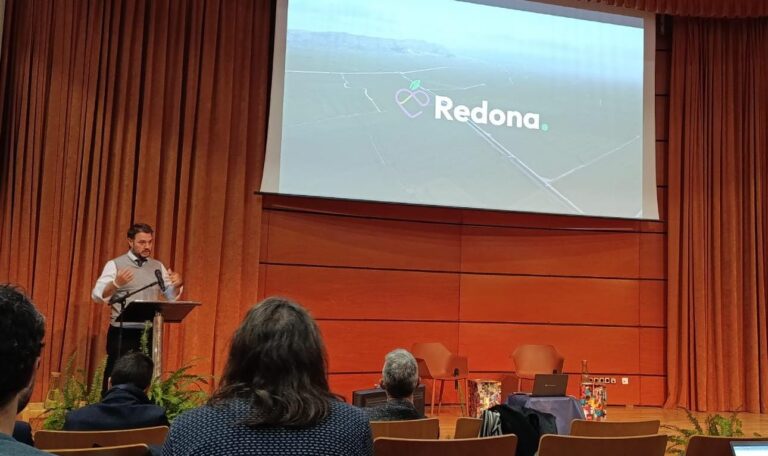
On March 26, the Universitat Politècnica de València (UPV) hosted the event “REDONA: Innovation and sustainability against food waste,” held in memory of Gloria Bigné, a key figure in promoting fairer and more sustainable food systems through the Tierra Ciudadana Chair. During the session, the REDONA project was officially introduced to the public. This food donation platform is already operating in Mercavalència, connecting surplus products from the agri-food chain with social entities such as Casa Caridad, giving a second life to goods discarded for commercial reasons but still suitable for consumption. The event, held at the Faculty of Business Administration and Management, was opened by Professor Norat Roig, principal investigator of the REDONA project. The opening included a presentation by Débora Domingo, Vice-Rector for Sustainable Campus Development, focused on circular economy initiatives at the university. One of the most emotional moments was the tribute to Gloria Bigné, a key advocate of ecological transition and coordinator for over a decade of the Tierra Ciudadana Chair, led by Professor José María García Álvarez-Coque. The day continued with a roundtable titled “Innovative solutions against food waste in the Mercas: The REDONA case in Mercavalència”, moderated by Norat Roig and featuring Francesc J. Cervera (UPV), Ángeles Hernández (Mercavalència), Guadalupe Ferrer (Casa Caridad), and Lidia García (València Innovation Capital). The panel discussed project progress, highlighting REDONA’s positive impact in the city and its potential to expand to other areas of the local food system. The event concluded with a space for dialogue and reflection among participating organizations, reaffirming a shared commitment to reducing food waste, urban sustainability, and social cohesion in València. REDONA is thus established as a strategic project for València, aligned with the city’s climate goals and carrying a strong social dimension, replicable in other territories seeking to reduce food waste through innovation and public-social collaboration.


REDONA presented at the ACIGAS Congress as an example of innovation against food waste

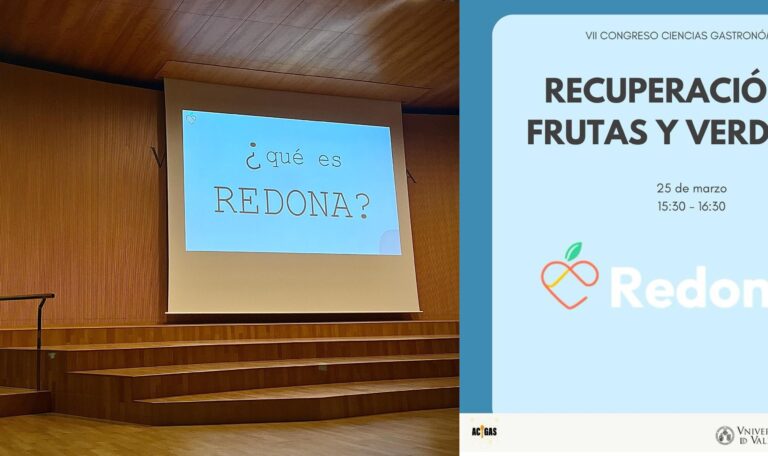
REDONA was presented on March 25 during the 7th edition of the ACIGAS Congress, held at the Faculty of Pharmacy and Gastronomic Sciences of the University of Valencia. The REDONA presentation was part of the congress program, organized by students of the Gastronomic Sciences degree, which brings together experts, students, and professionals from the gastronomic sector every year to reflect on the main challenges in food, sustainability, and health. During the presentation, REDONA was highlighted as a project that aims to provide viable and sustainable solutions to one of the major challenges in the agri-food chain: food waste. Foods that do not progress through the stages of the food supply chain –due to commercial reasons rather than quality issues– represent a real opportunity to be recovered and donated, helping to fight food insecurity and promote social and environmental justice. REDONA aligns with the new national legislative framework, which requires companies and organizations to take active measures to reduce food waste. In this context, the project stands not only as an innovative response but also as a replicable model in other regions committed to sustainability.

REDONA presents its project to AMAFRUVA with a view to future collaborations

On January 29, 2025, a meeting took place at Mercavalència between representatives of the REDONA project and the Association of Fruit and Vegetable Wholesalers (AMAFRUVA), with the aim of presenting the initiative and exploring potential avenues for collaboration. During the meeting, the team from the Universitat Politècnica de València outlined the benefits of REDONA for market operators, its alignment with current legal frameworks, the functionality of the technological tool, and the implementation timeline, which includes a pilot project. The role AMAFRUVA could play in disseminating the project among its members was highlighted, along with its possible involvement in training activities and the upcoming public presentation event at Mercavalència. Both parties exchanged views on potential synergies between REDONA and other ongoing initiatives, especially in the field of circular economy. The session helped strengthen mutual understanding and laid the groundwork for potential future cooperation in addressing food waste in the wholesale sector.

REDONA Project, to avoid food waste in Mercavalència, on the SER radio station.

Norat Roig, Principal Researcher of the REDONA Project at the Universitat Politècnica de València has detailed what this initiative consists of, which basically aims to ensure that the food that arrives at Mercavalència from wholesalers does not also end up in the rubbish bin. ‘It is in the wholesaler-retailer transaction where this waste is produced that we want to act on because to date nothing has been done,’ he explained. Thus, when it is finally operational, these technologies will allow wholesalers’ surpluses to be used by NGOs and other organisations, which will be able to get hold of all this food so that it can reach vulnerable families in the city of Valencia. You can listen to the interview at: Hoy por Hoy Valencia 26/09/2024- Tramo de 12:20 a 13:00) | Cadena SER

Privacy preferences center
Logo de REDONA Recuperación de frutas y verduras en Mercavalència UPV

When you visit any website, it may obtain or save information in your browser, generally through the use of cookies. This information may be about you, your preferences, or your device, and is mainly used to make the site work as expected. The information does not usually directly identify you, but it can give you a more personalized web experience. Because we respect your right to privacy, you can choose not to allow some types of cookies. Click on the different category headings to find out more and change our default settings. However, blocking some types of cookies may impact your experience of the site and the services we are able to offer.

More information

Technical cookies

These are those that allow the user to navigate through a website, platform or application and the use of the different options or services that exist therein, such as, for example, controlling traffic and data communication, identifying the session, accessing restricted access parts, remembering the elements that make up an order, carrying out the purchase process of an order, making the request for registration or participation in an event, using security elements during navigation, storing content for the dissemination of videos or sound or sharing content through social networks.

Analysis or measurement cookies

These are those that allow the person responsible for them to monitor and analyze the behavior of the users of the websites to which they are linked. The information collected through this type of cookies is used to measure the activity of the websites, application or platform and to create navigation profiles of the users of said sites, applications and platforms, in order to introduce improvements based on the analysis of the data on the use made by the users of the service.