

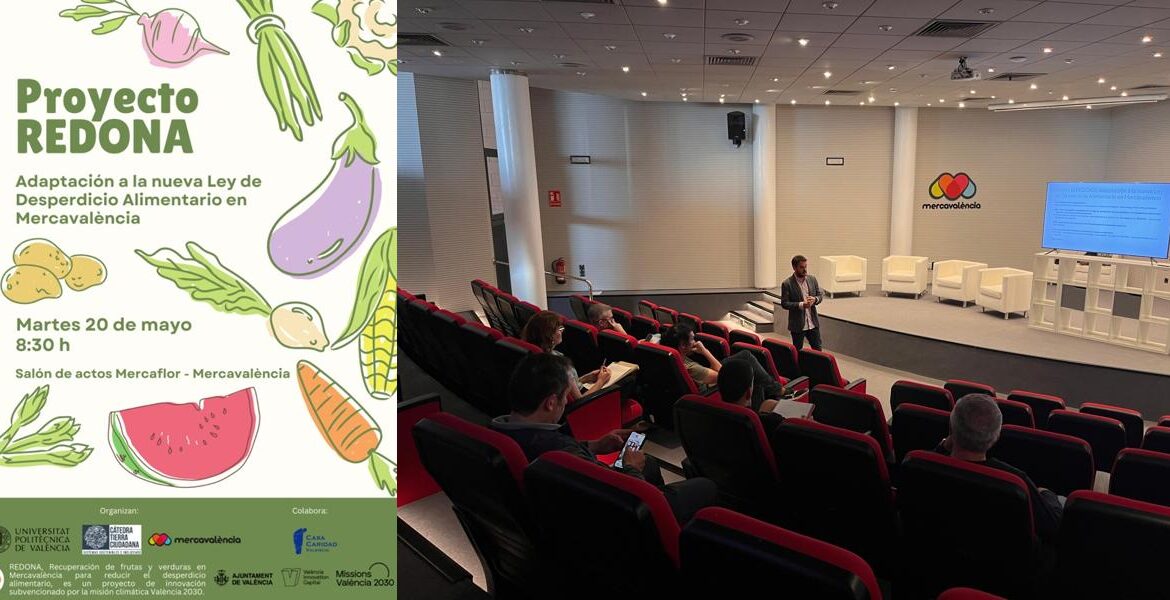
Mercavalència hosted an information session on the REDONA project, aimed at helping the wholesale sector comply with the new Law on the Prevention of Food Loss and Waste, while promoting sustainable and economically viable practices. The event was held in collaboration with the Universitat Politècnica de València (UPV), representatives from Mercavalència, and the social organization Casa Caridad.
During the session, the contents of the new legislation were discussed, highlighting how REDONA can support compliance in a simple way, without interfering with companies’ daily operations. Special emphasis was placed on the tax benefits and cost savings associated with donating surplus food, compared to the economic losses caused by discarding still-edible products.
Casa Caridad, the organization receiving the donated food, emphasized that it has the necessary infrastructure to absorb these surpluses and put them to immediate social use. The difference between surplus and waste was also clarified, stressing the importance of not donating food that is no longer suitable for consumption.
REDONA proposes an operational protocol adapted to the pace of the wholesale market: product listings should be made before 7:00 a.m., and donations can be delivered between 8:00 and 8:30 a.m. This planning allows vendors to anticipate product deterioration by using their experience to identify what will not be sold in time.
The organizers reminded attendees that the documentation required for donating is simple and very similar to what is already used with regular clients. In addition, the project is designed to accommodate specific situations, offering personalized support to each business.
REDONA stands as a model of effective collaboration between universities, public administration, businesses, and social organizations to address the challenge of food waste from an innovative, pragmatic, and climate-responsible perspective.