Tag: food waste

REDONA strengthens its operations in real-world settings: another successful donation completed

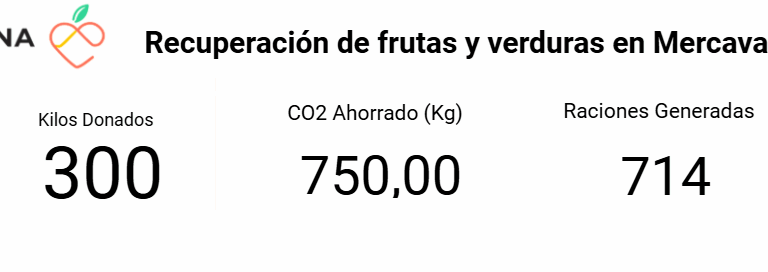
The REDONA project continues to move forward steadily toward its consolidation as an effective tool for food recovery at Mercavalència. This week, a new donation was successfully registered and completed: 300 kg of food donated by Frutas Rovi to Casa Caridad. This action demonstrates that donations are now being carried out in real environments, beyond pilot phases. Thanks to the use of traceability technologies and the ability to exchange documentation, the process ensures a transparent, reliable, efficient, and fast operation. In addition to fulfilling its social and environmental mission, REDONA continues to fine-tune procedures at every stage. Data validation, agent interoperability, and digital traceability allow for ongoing improvement, preparing the system for scaling and broader adoption. With this type of initiative, REDONA not only facilitates the safe donation of food surpluses but also helps reduce waste, strengthen social solidarity, and promote the circular economy within the agri-food sector. We keep recovering, we keep improving!

UPV promotes the fight against food waste through REDONA training for wholesalers

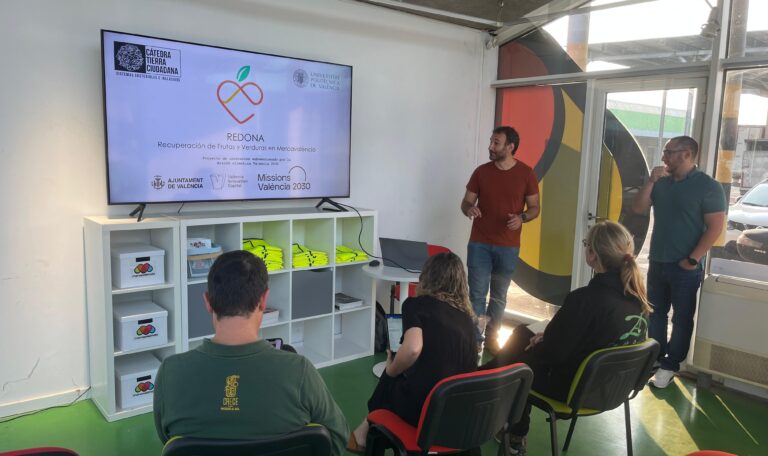
As part of the REDONA innovation project, funded by the València 2030 Climate Mission, Mercavalència hosted a training session aimed at wholesalers in the fruit and vegetable market. This initiative reinforces the commitment of the Valencian food ecosystem to sustainability, circular economy, and food justice. The training session, held at the Mercavalència facilities, aimed to train operators in the use of the REDONA platform, a digital tool designed to channel food surpluses to social entities in a safe, agile, and traceable manner. Key topics covered included the difference between surplus and food waste, the minimum volume required to make donations, the criteria for determining whether food is fit for consumption, and the schedule for publishing offers and organizing collections by recipient organizations. Participants were also informed about the tax benefits linked to food donations, including 0% VAT and corporate tax deductions ranging from 40% to 50%, depending on donation history — strengthening the social and economic incentive to participate in the system. The practical component of the training resolved operational questions such as product listing management, pickup procedures by social organizations, the necessary documentation to formalize donations, and the steps to access the corresponding tax deduction. Technical issues were addressed, and all participating companies were ensured access to the platform. With this session, REDONA continues to consolidate itself as an innovative solution that fosters public-private collaboration toward a more efficient and fair food system. As a key agro-logistics hub, Mercavalència reaffirms its role in the transition toward a climate-neutral and socially engaged city.

Agronews highlights the REDONA project by UPV to reduce food waste at Mercavalència

The specialized media outlet Agronews Comunitat Valenciana has published a news article highlighting the REDONA project, an initiative promoted by the Universitat Politècnica de València (UPV) to tackle food waste at Mercavalència through surplus donations and circular economy strategies. Direct link to the article:https://www.agronewscomunitatvalenciana.com/la-upv-apuesta-por-reducir-el-desperdicio-alimentario-con-donaciones-y-economia-circular The REDONA project is part of the innovation call funded by the València 2030 Climate Mission, and proposes an effective solution to give a second life to food that does not reach consumers but is in perfect condition to be donated to social organizations. REDONA systematizes the management of food surpluses at Mercavalència to facilitate their donation and ensure traceability. In doing so, it helps prevent the generation of organic waste and contributes to a circular economy model with a positive environmental and social impact.

REDONA is presented to the wholesale sector at Mercavalència as a response to the new food waste law

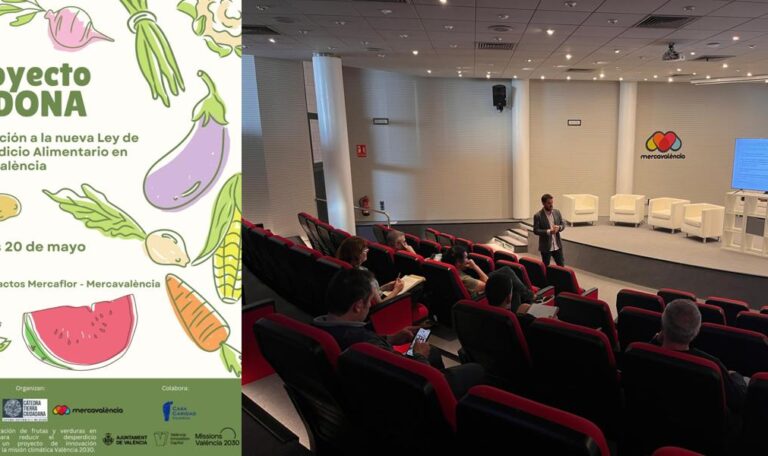
Mercavalència hosted an information session on the REDONA project, aimed at helping the wholesale sector comply with the new Law on the Prevention of Food Loss and Waste, while promoting sustainable and economically viable practices. The event was held in collaboration with the Universitat Politècnica de València (UPV), representatives from Mercavalència, and the social organization Casa Caridad. During the session, the contents of the new legislation were discussed, highlighting how REDONA can support compliance in a simple way, without interfering with companies’ daily operations. Special emphasis was placed on the tax benefits and cost savings associated with donating surplus food, compared to the economic losses caused by discarding still-edible products. Casa Caridad, the organization receiving the donated food, emphasized that it has the necessary infrastructure to absorb these surpluses and put them to immediate social use. The difference between surplus and waste was also clarified, stressing the importance of not donating food that is no longer suitable for consumption. REDONA proposes an operational protocol adapted to the pace of the wholesale market: product listings should be made before 7:00 a.m., and donations can be delivered between 8:00 and 8:30 a.m. This planning allows vendors to anticipate product deterioration by using their experience to identify what will not be sold in time. The organizers reminded attendees that the documentation required for donating is simple and very similar to what is already used with regular clients. In addition, the project is designed to accommodate specific situations, offering personalized support to each business. REDONA stands as a model of effective collaboration between universities, public administration, businesses, and social organizations to address the challenge of food waste from an innovative, pragmatic, and climate-responsible perspective.

València celebrates the first donation of the REDONA project to combat food waste

The REDONA project, a pioneering initiative to reduce food waste in Mercavalència, has made its first official donation: 100 kg of potatoes delivered by Frutas Rovi to Casa Caridad. This milestone marks the beginning of a strategic collaboration between wholesalers and social organizations to redirect surplus food to those who need it most. This trial also helped consolidate the process of posting, accepting, and collecting products, establishing the basic procedure for how this organizational innovation will operate in the fruit and vegetable market. Key process elements were refined, such as the need for immediate publication and collection, with stricter schedules to ensure freshness and food use. The success of this first donation demonstrates REDONA’s potential to transform surplus food management in València, fostering a healthier, more sustainable, and more caring city.

REDONA launches first donation trials at Mercavalència and strengthens its progress

The REDONA project, promoted by the Universitat Politècnica de València with the aim of reducing food waste at Mercavalència, has started its first pilot tests of food donations this week. This phase marks an important milestone in the implementation of a system that will allow surplus food to be redistributed to social entities efficiently, safely, and in a coordinated manner. During these initial trials, the logistics circuit, product traceability, and handling protocols are being validated, ensuring that the entire process complies with the recently approved regulations on food waste. REDONA thus continues its path steadily, reinforcing the commitment of Mercavalència and its wholesale operators to a more sustainable and supportive model. The project involves active collaboration with  Casa Caridad, a prominent social organization in València, Mercavalència operators such as Frutas Rovi, and Mercavalència itself. It is currently in a full phase of technical evaluation and operational adjustment. In the coming weeks, the trials are expected to be extended to new operators and the first donations carried out, with the goal of establishing a permanent surplus food donation system that can be replicated in other wholesale markets.

The new Food Waste Law strengthens the value of projects like REDONA

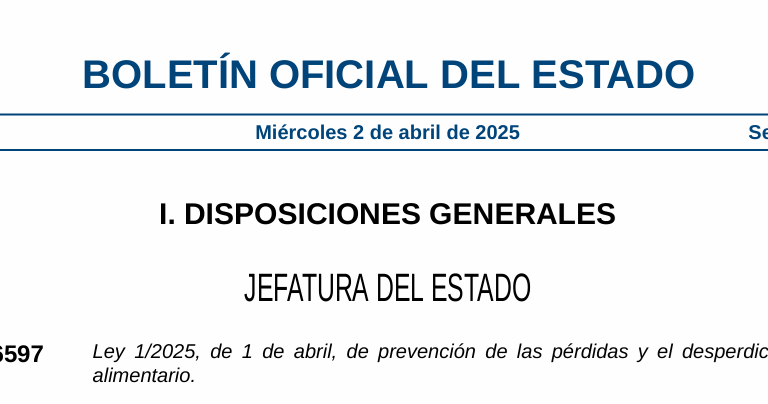
The Official State Gazette (BOE) has published Law 1/2025, on the prevention of food loss and waste—a pioneering regulation in Spain that requires all stakeholders in the food chain to implement specific prevention plans and prioritize the donation of surpluses for human consumption. The new law establishes a hierarchy of food use for unsold items, encouraging their redistribution for social purposes, transformation into other products, or, as a last resort, their use for animal feed or composting. This legislative step aims to align the agri-food system with the principles of circular economy and social justice. In this context, the REDONA project, led by the Universitat Politècnica de València, stands out as a forward-thinking initiative. REDONA is already operational in Mercavalència, redirecting food surpluses to social organizations such as Casa Caridad, thereby preventing waste and ensuring that nutritious food reaches people in vulnerable situations. The implementation of REDONA not only complies with the new law’s requirements, but also reinforces the role of universities and innovation ecosystems as drivers of social change. Its local impact in València proves that it is possible to design replicable solutions that integrate sustainability, justice, and collaboration between the public and social sectors.

REDONA is officially presented as a model of innovation and sustainability against food waste

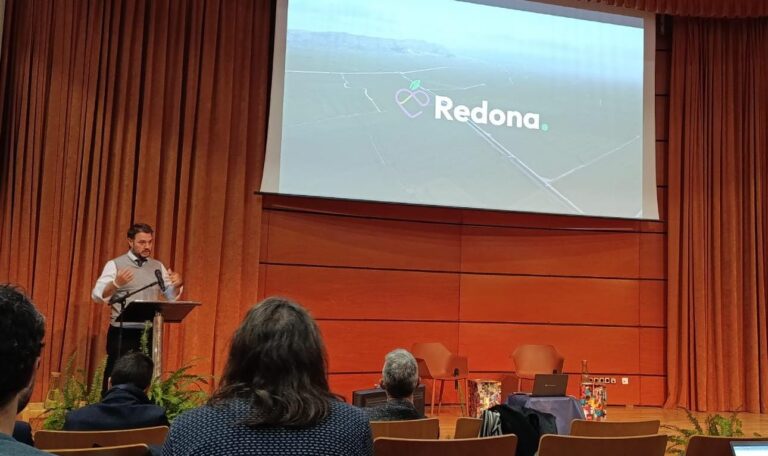
On March 26, the Universitat Politècnica de València (UPV) hosted the event “REDONA: Innovation and sustainability against food waste,” held in memory of Gloria Bigné, a key figure in promoting fairer and more sustainable food systems through the Tierra Ciudadana Chair. During the session, the REDONA project was officially introduced to the public. This food donation platform is already operating in Mercavalència, connecting surplus products from the agri-food chain with social entities such as Casa Caridad, giving a second life to goods discarded for commercial reasons but still suitable for consumption. The event, held at the Faculty of Business Administration and Management, was opened by Professor Norat Roig, principal investigator of the REDONA project. The opening included a presentation by Débora Domingo, Vice-Rector for Sustainable Campus Development, focused on circular economy initiatives at the university. One of the most emotional moments was the tribute to Gloria Bigné, a key advocate of ecological transition and coordinator for over a decade of the Tierra Ciudadana Chair, led by Professor José María García Álvarez-Coque. The day continued with a roundtable titled “Innovative solutions against food waste in the Mercas: The REDONA case in Mercavalència”, moderated by Norat Roig and featuring Francesc J. Cervera (UPV), Ángeles Hernández (Mercavalència), Guadalupe Ferrer (Casa Caridad), and Lidia García (València Innovation Capital). The panel discussed project progress, highlighting REDONA’s positive impact in the city and its potential to expand to other areas of the local food system. The event concluded with a space for dialogue and reflection among participating organizations, reaffirming a shared commitment to reducing food waste, urban sustainability, and social cohesion in València. REDONA is thus established as a strategic project for València, aligned with the city’s climate goals and carrying a strong social dimension, replicable in other territories seeking to reduce food waste through innovation and public-social collaboration.


REDONA presented at the ACIGAS Congress as an example of innovation against food waste

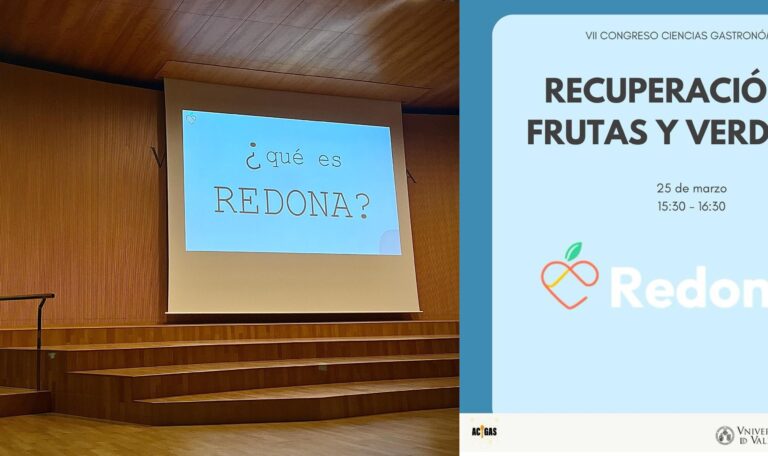
REDONA was presented on March 25 during the 7th edition of the ACIGAS Congress, held at the Faculty of Pharmacy and Gastronomic Sciences of the University of Valencia. The REDONA presentation was part of the congress program, organized by students of the Gastronomic Sciences degree, which brings together experts, students, and professionals from the gastronomic sector every year to reflect on the main challenges in food, sustainability, and health. During the presentation, REDONA was highlighted as a project that aims to provide viable and sustainable solutions to one of the major challenges in the agri-food chain: food waste. Foods that do not progress through the stages of the food supply chain –due to commercial reasons rather than quality issues– represent a real opportunity to be recovered and donated, helping to fight food insecurity and promote social and environmental justice. REDONA aligns with the new national legislative framework, which requires companies and organizations to take active measures to reduce food waste. In this context, the project stands not only as an innovative response but also as a replicable model in other regions committed to sustainability.

REDONA stands out at the XVII Setmana de l’Economia d’Alzira as a benchmark in the fight against food waste

On February 17, 2025, the REDONA project took part in the round table titled “The value of surplus: strategies against food waste”, held at the Casa de la Cultura in Alzira as part of the XVII Setmana de l’Economia, organized by IDEA Alzira. The event brought together experts from academia and the agri-food sector to discuss innovative solutions to reduce food waste. During the session, Francesc J. Cervera Ferrer, representing the Universitat Politècnica de València, presented REDONA as a pioneering technological tool that facilitates the recovery and redistribution of discarded fruits and vegetables at Mercavalència. His presentation addressed the causes of food waste in the fruit and vegetable market, the legal framework, the social and environmental benefits of the project, and the challenges and opportunities for its future expansion. The round table also featured contributions from M.ª Ángeles Fernández Zamudio (UPV) and Cirilo Arnandis (Cooperatives Agroalimentàries of the Valencian Community), and was moderated by journalist Lluch García Garay. The event highlighted the importance of initiatives like REDONA in building more sustainable and resilient food systems.

Privacy preferences center
Logo de REDONA Recuperación de frutas y verduras en Mercavalència UPV

When you visit any website, it may obtain or save information in your browser, generally through the use of cookies. This information may be about you, your preferences, or your device, and is mainly used to make the site work as expected. The information does not usually directly identify you, but it can give you a more personalized web experience. Because we respect your right to privacy, you can choose not to allow some types of cookies. Click on the different category headings to find out more and change our default settings. However, blocking some types of cookies may impact your experience of the site and the services we are able to offer.

More information

Technical cookies

These are those that allow the user to navigate through a website, platform or application and the use of the different options or services that exist therein, such as, for example, controlling traffic and data communication, identifying the session, accessing restricted access parts, remembering the elements that make up an order, carrying out the purchase process of an order, making the request for registration or participation in an event, using security elements during navigation, storing content for the dissemination of videos or sound or sharing content through social networks.

Analysis or measurement cookies

These are those that allow the person responsible for them to monitor and analyze the behavior of the users of the websites to which they are linked. The information collected through this type of cookies is used to measure the activity of the websites, application or platform and to create navigation profiles of the users of said sites, applications and platforms, in order to introduce improvements based on the analysis of the data on the use made by the users of the service.